
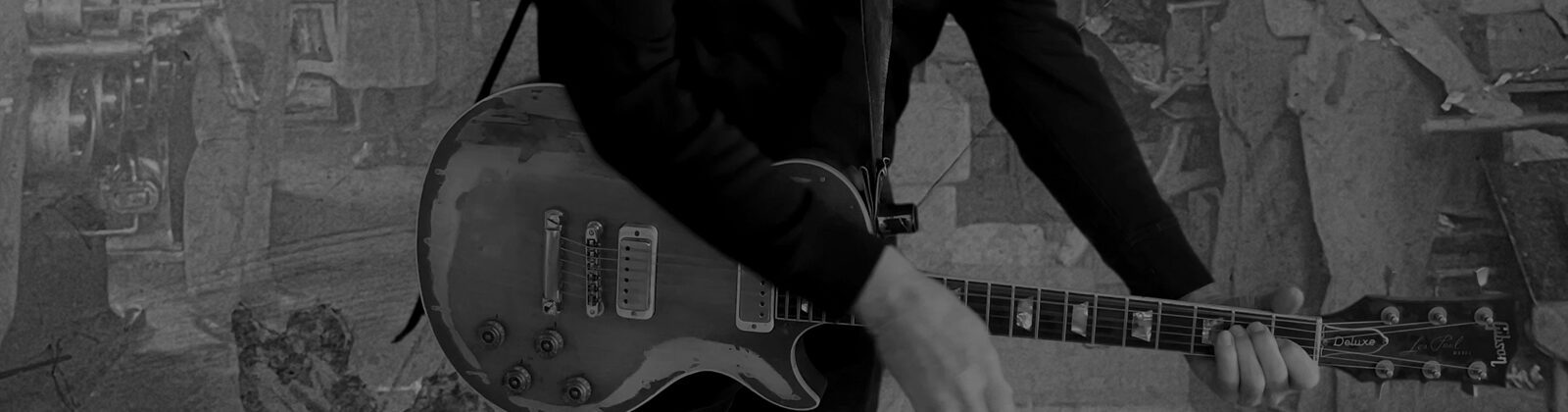

Come Along Little Brother (Interview)
Hello everyone, it is your host Oliver from DULAXI, and today I am delighted to be joined by Tom Kuhr, a multi-instrumentalist and singer-songwriter from Detroit, United States, known for his work with Spyderhuff. Blending Americana, folk-rock, blues, and country, Tom brings decades of musical experience to his solo EP, Come Along Little Brother, released on October 16, 2026. His songwriting combines personal storytelling, sarcasm, and an appreciation for life’s ironies, creating a distinctive approach to roots music.
Oliver:
Your musical background includes everything from jazz-fusion and hard rock to Americana, folk-rock, blues and country. What has kept you curious about exploring different styles, and how do those different musical experiences influence the way you approach songwriting today?
Tom Kuhr:
I’m 70 years old now. When you reach for old parts and experiences hanging on the garage wall, it’s really hard to stop.
Oliver:
You and Don Beyer have known each other since your younger years, sharing both a friendship and a history of playing music together. How did that relationship develop, and what makes working with someone who has known you for so long creatively rewarding?
Tom Kuhr:
We first met in 7th grade and have been playing together ever since. We’ve traveled the long dusty road of musical genres and know exactly what to expect from each other. I’m more the undisciplined crazy village idiot and he’s more the understated and tasteful engineer.
Oliver:
You describe this release as a solo effort intended to showcase new material, but Don contributes considerably through composition, bass, keyboards, mixing and mastering. How do you both divide the creative responsibilities, and how would you describe the musical partnership behind this EP?
Tom Kuhr:
It’s something we really had to think about and build a process for. Don lives in Florida and I live in Michigan. Since we know each other so well the distance is not a problem. However, we found it very important to use the same DAW system because it saves so much time. We both use Apple Logic Pro.
Oliver:
You have spoken about trying to avoid being overshadowed by the growing presence of AI in music, while creating music that still sounds and feels human. What concerns you most about AI’s increasing role in music production, and what do you believe human musicians can bring to a recording that technology cannot easily reproduce?
Tom Kuhr:
AI is a giant rearview mirror. Try driving your car next time by just using the rearview mirror. If you pour a lot of humanity into your music and lyrics, it’s going to show. AI can’t do that. I think there is a necessary need for humans to be moved by other humans. Al can’t suffer from a broken heart…it’s an algorithm after all.
Oliver:
The EP brings together several musical traditions, but its lyrics also have a strong sense of sarcasm and an appreciation for life’s contradictions. Why is humor, particularly when looking at everyday situations, such an important part of your songwriting?
Tom Kuhr:
Life is tragically funny and ironic. Nobody wants to listen to a person that takes themselves too seriously.
Oliver:
The title track, “Come Along Little Brother,” has an introduction inspired by the classic film The Night of the Hunter, particularly the haunting image of Robert Mitchum singing while travelling along a river. What attracted you to that particular cinematic atmosphere, and how did you translate that inspiration into the song’s musical identity?
Tom Kuhr:
Charles Lawton, the director of the film, shot it entirely on a huge sound stage. The look and feel had an intentional theatrical stage vibe to it that I absolutely love. But what really blew my mind was how Robert Mitchum’s voice sounded in that huge space. It was so lonesome and big. That’s what I wanted to recreate.
Oliver:
The title track also carries darker qualities alongside an almost pub-like sing-along character. How do you approach balancing those contrasting moods, and what did you want listeners to experience as the song develops?
Tom Kuhr:
Some people live hard lives and need to acknowledge it somehow. If you’ve ever been to small pub and sang along to songs, I can guarantee they were not happy songs about sunshine and flowers. The best ones are always about broken hearts and death.
Oliver:
“Road Map” introduces lap steel guitar and fingerpicked dobro before bringing in keyboards with a distinctly jazzy character. How did you arrive at this unusual combination of country instrumentation and jazz-influenced textures, and what role did Don play in shaping its arrangement?
Tom Kuhr:
Well, it’s really not intentional. Like I said, I’m just grabbing parts hanging on the garage wall and welding them together. It’s only when I stand back and look at it that I can define it. Don spent a lot of time with my original piano part and brought in a “Weather Report” synth part that really embellishes the feel of the whole arrangement.
Oliver:
The lyrics of “Road Map” use humor to reflect on modern life and our tendency to want things that are missing or difficult to find. What observations about contemporary life inspired the song, and how do you use satire to communicate ideas without making the writing feel overly serious?
Tom Kuhr:
Here we are living in a world with too much of everything and we are still fumbling around in a fog and reaching for things that just aren’t there. I find that hilarious.
Oliver:
“Rattle Can” takes an unusual approach to the traditional work song by focusing on someone working in an industrial spray paint booth. What inspired you to write about this particular occupation, and how did you turn such an everyday working environment into a subject for a song?
Tom Kuhr:
This was my last stretch of employment. I was hired to be the Operations Manager for a startup company. We were struggling big time, and it was during Covid. We absolutely could not find an industrial painter that would show up for more than day and a half, so I volunteered to “temporally” fill in until we could find someone. Well, three years later I’m looking around the paint booth thinking I should write a song about this. So, I walked out the door and quit (it was time to retire anyway).
Oliver:
The laidback groove and atmospheric arrangement of “Rattle Can” give the song a playful character, particularly through the image of feeling like a superhero while working with spray paint. How important is storytelling through ordinary people and overlooked experiences in your songwriting?
Tom Kuhr:
That whole paint booth ecosystem is so rich with metaphors about life. If people would just write about their daily experiences in a literal way and juxtapose them to an unexpected musical groove, cool things can happen. That’s like kicking AI in the balls!
Oliver:
Reworking a traditional piece such as “Amazing Grace” comes with its own expectations because so many listeners already have a personal connection to the original. What made you want to approach this familiar composition through the unlikely combination of gospel and the feel of “Honky Tonk Women”?
Tom Kuhr:
I was only half serious about doing the song when I first sat down to work it out. I knew I needed to find some kind of different musical feel. It just came out that way. It’s good example of standing back afterwards and saying, “Hey, that kind of sounds like Honky Tonk Women, don’t it?”
Oliver:
“Jesus Just Left Chicago” is a song you had wanted to record for years, but you felt you needed your voice to grow older before giving it the right interpretation. What was it about the song that stayed with you for so long, and what did you discover about your own voice that made this the right time to record it?
Tom Kuhr:
Well, ZZ Top’s Tres Hombres album was a big explosion that blew up in my head, and it’s been a guiding light ever since it came out (1973). “Jesus Just Left Chicago” in particular, has always haunted me. If you’re going to cover a song like that you can’t have a pretty voice. It needs to have some milage and roughness. I thought it was time.
Oliver:
The idea of placing Jesus within a modern-day setting gives “Jesus Just Left Chicago” an interesting lyrical perspective. What interests you about bringing spiritual or biblical figures into familiar contemporary environments, and how do you approach interpreting material that already carries such strong cultural associations?
Tom Kuhr:
The Bible is so full of great stories about good and evil. The metaphors are so rich. The approach to “Jesus Just Left Chicago” can only be one way…straight on and stripped-down blues.
Oliver:
Your influences include songwriters and musicians such as John Hiatt, Steve Earle, Leo Kottke, Buddy Miller, Nick Cave, Warren Zevon, Tom Waits, James McMurtry and Robert Plant. Which qualities in these artists have had the greatest influence on your own creative identity, and how do you make sure those influences become part of your own voice rather than something you simply imitate?
Tom Kuhr:
I use most of my energy and concentration to try to sing in key. I have no idea how to imitate anybody else. I look at those songwriters as more like food chefs. I pay close attention to how they spice and flavor their music to make it unique to them.
Oliver:
Having released music with Spyderhuff while also developing your own material, how do you distinguish between what you want to express through the band and what you want to explore as a solo artist? Are there ideas or musical directions that you find easier to pursue independently?
Tom Kuhr:
Spyderhuff is louder, heavier, and more rock based. Certain lyrics can be better expressed that way. The solo effort uses more introspective and story-telling lyrics that need a more subtle musical pallet.
Oliver:
After years of making music, recording, performing and collaborating, what continues to motivate you creatively? When you look at the music you are making today compared with the work you were doing in your younger years, what do you feel has changed most about you as a musician?
Tom Kuhr:
I’m just more capable. Getting older has just unlocked a lot of creativity. Many of the song lyrics I’m doing lately are from notebooks that I wrote 40 plus years ago. At the time, I just wasn’t capable enough to do anything with them or just didn’t have the right attitude.
Oliver:
With Come Along Little Brother now released, what would you like listeners to take away from the EP as a complete body of work? Are there other musical ideas, collaborations or creative directions you are looking forward to exploring next?
Tom Kuhr:
Listen to the EP as a whole from the first song to the last. Much can be appreciated and enjoyed by listening to a group of songs that are intended to flow together. Just listen to ZZ Top’s Tres Hombres album. I’ve got much more music cooking on the stove. Stay tuned!
“Tom Kuhr finds stories in places many songwriters might overlook, from the routines of working life to memories that have waited decades to become songs. His music reflects the freedom to experiment, laugh at life’s contradictions, and keep creating without losing sight of the human experiences that make a song worth sharing.”
~ Oliver (DULAXI Team)